Saturday, 27 June 2015

Third-party Apple Watch strap to add 30 hours of battery life


The Apple Watch may not be so bad after all when it comes to battery life, but it’s definitely no Pebble Time either. You can get 1.5 days on average with it, so long as you don’t train at the gym for more than an hour, or simply don’t use it for fitness. We thought the idea of bringing extra functionality through watch straps was only a Pebble idea, but it isn’t.

Reserve Strap for Apple Watch is planned to make its debut on November 3, and it’s main selling point is adding an extra 30 hours of battery life to the 1.5 days you already get, which would pretty much mean doubling it. It’s not the fanciest strap in the world, but you get white, grey and black color options, in case you’re interested. The band uses the not-so-secret port hidden inside one of the watch strap areas, so it won’t interfere with the heart rate sensors. Pre-orders have begun already, though it will set you back a steep $249 each.

Reserve Strap confirms that these bands are as durable as Apple Watch bands, which is a good thing, as we can confirm that Apple Watch Sports bands are definitely durable. Let’s just see how that Apple approval process for watch bands goes.

Friday, 26 June 2015

Toyota adopts Ford AppLink to keep Apple CarPlay, Android Auto honest

2014  Toyota Highlander center stack LCD

Toyota will work with Ford to integrate an open-source version of Ford’s Sync AppLink into future Toyota vehicles. The software, called SmartDeviceLink (yes, three words concatenated) lets a car access and control applications running on the smartphone, using the car’s LCD, dashboard controls, and voice input button. This is roughly the same as what Apple CarPlay and Android Auto do.

Two differences will be apparent immediately between AppLink / SmartDeviceLink on one hand and CarPlay / Android Auto on the other: Ford claims more than 70 apps already available (AppLink apps should run as SmartDeviceLink apps as well). CarPlay and Android Auto have just a handful. Also, there may be more freedom for automakers to tweak and brand the interface the user sees on the LCD. Right now, it’s hard to tell a CarPlay app on a Chevrolet from one on a Volvo or Ford.


2013ToyotaAvalonLTD011-lcd


Embed SDL code once, run the app everywhere


If a smartphone app-builder embeds the SmartDeviceLink hooks into its app, it runs everywhere there’s a car with AppLink or SmartDeviceLink in the infotainment system. That’s similar to what happens with CarPlay or Android Auto: Develop links once, run everywhere.

Separate announcements came Wednesday from Ford and Toyota. Both said they’ll “explore collaboration.” Shigeki Terashi, senior managing officer at Toyota, said, “We continue to investigate new technologies that both enhance and safeguard the driving experience of Toyota and Lexus owners.” Don Butler, executive director, Ford Connected Vehicle and Services, said, “Dashboard interface design and smartphone connectivity are key elements for product differentiation within the industry.”

Advantages of SDL cited by the two companies included a broader range of supported devices (iPhones back to iPhone 4, not iPhone 5) and clear requests for permission before grabbing and sharing personal and vehicle data.


Hyundai-Apple-CarPlay-dash

Automakers don’t want to lose control of the center stack

Apple CarPlay Volvo-2

armakers around the world fear that if Apple CarPlay and Google Android Auto take hold, their cars could become commodity devices. SmartDeviceLink holds the potential to maintain a balance of power among automakers, Apple, and Google. In its first iteration, the CarPlay interface looks the virtually same on every car. You’d be hard-pressed to tell CarPlay is running on a Hyundai (above) or Volvo (inset) other than the Hyundai app and Volvo’s portrait orientation.

AppLink 3.0, which ships this summer as part of Ford Sync 3.0 (delivered first in Ford Escape and Ford Fiesta), has a projection mode to display moving graphics on the cars’ LCDs. That enables a choice of navigation apps, something buyers would love if automakers provide big LCD without forcing embedded navigation. That’s one of several problems users might perceive with early versions of CarPlay and Android Auto.

Toyota noted it is working with Livio, a Ford subsidiary, as well as Ford. Ford and Toyota have had an agreement since 2011 to work on “next generation standards for in-car telematics.”

How many standards will automakers support?


Most automakers will wind up supporting both Apple CarPlay and Android Auto. There are more Android phones than Apple iPhones on the market, but Apple’s minority share is still huge, and iPhone users tend to skew more toward higher-end cars. Ford hopes automakers adopt SmartDeviceLink as well.

Hyundai was the first automaker to announce support for one phone-OS technology, Android Auto. Chevrolet followed a day later (Tuesday, June 2) with support for both Android Auto and Apple CarPlay. Toyota has announced support for CarPlay but not, so far, for Android Auto.

If nothing else, supporting SmartDeviceLink is an inexpensive way to put pressure on Apple and Google to allow more flexibility in branding the onscreen display.

Not that anyone is necessarily asking consumers, but those who have multiple cars of different brands probably wouldn’t mind interfaces that look more or less the same across the brands. They’ve even said — if automakers are listening — that it would be be nice to have consistent switchgear layout across brands: how far you rotate a headlamp knob to set it to Auto On, or whether you speed up a windshield wiper by pushing down or up on the stalk.






Thursday, 25 June 2015

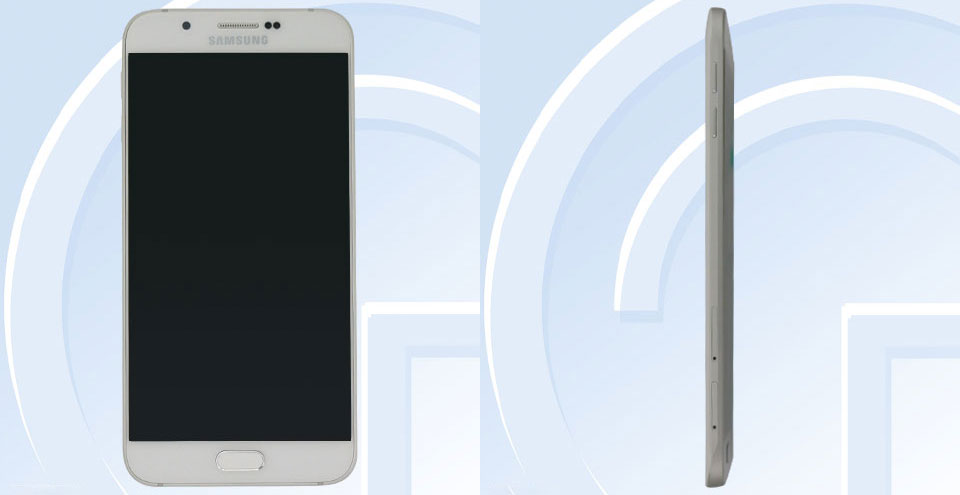
Samsung's Galaxy A8 should be its thinnest smartphone yet

Samsung Galaxy A8 at TENAA


Samsung isn't synonymous with extra-thin smartphones -- that distinction usually goes to Chinese vendors like Gionee or Oppo. However, you may have to rethink that reputation very shortly. Samsung's as yet unannounced Galaxy A8 has just been approved by China's telecom regulator TENAA, and the Android smartphone is unquestionably Samsung's thinnest yet at just over 5.9mm (0.23 inches) thick. Suddenly, the 6.3mm Galaxy A7 seems downright chunky.

Not that you'll necessarily be clamoring to get one. This is strictly a mid-range handset with a 5.7-inch 1080p Super AMOLED screen, an eight-core Snapdragon 615 processor, 2GB of RAM and 16GB of expandable storage. Its biggest perks are the subtly-integrated 16-megapixel rear camera, a 5-megapixel selfie cam and a healthy 3,050mAh battery. Moreover, the device might not show up in your neck of the woods. The Galaxy A8 going through testing at TENAA and the FCC only has China-centric LTE data, and the A-series phones haven't been readily available in the US so far. If you're absolutely determined to have the slimmest Samsung device you can get, though, you have something to look forward to in the near future.

Monday, 22 June 2015

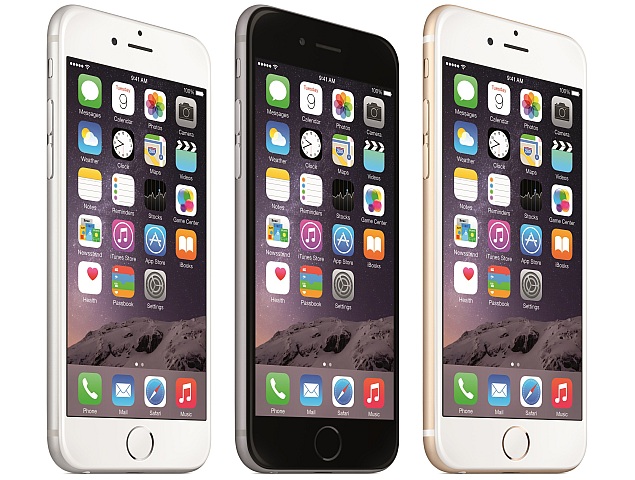
Next iPhone Models Tipped to Be Bigger and Stronger

apple_iPhone_6_triple.jpg?downsize=635:475&output-quality=80&output-format=jpg


The next iPhone leaks and rumours are now more frequent, and the latest additions to the list are the use of a 7000 Series aluminium build, which will help ensuring no bendgate issues. The next iPhone models, expected to be called the iPhone 6s and iPhone 6s Plus, are also said to feature no camera bump, and be slightly bigger in size than previous models.

According to Macotakara website, the rumoured next iPhone models would be sporting a stronger Series 7000 aluminium, which is said to be 60 percent tougher than the current aluminium alloy being used in Apple Watch Sports Edition. The blog cites noted KGI analyst, Ming-Chi Kuo. The smartphone might also be 0.15mm longer and 0.2mm thicker than the current models.

The 0.2mm thickness is being speculated to be included because of the Force Touch feature for the handset's display. Kuo had already tipped the inclusion of the feature last month. We already have seen the feature in Apple Watch wearables, and the new 12-inch MacBook. Moreover, reports from last month showcasing iOS 9 hinted Apple's plans to bring the feature in future handsets. It is yet to be detailed how the function would work on the handset.

Apple is reportedly also planning to completely eliminate the camera bump from the upcoming iPhone models. A couple of previous reports have stressed on the fact that Apple's next iPhone model will feature major upgrade in the camera department, with one claiming that the iPhone 6s and iPhone 6s Plus will include a 12-megapixel rear camera instead of the 8-megapixel camera seen in last four generation iPhones.

A report from last week even suggested the smartphones to sport a FaceTime camera with support for recording 1080p videos and capturing 240fps slow-mo videos at 720p.

The report claims the next iPhone models to launch in Rose Gold colour variant, besides the regular Space Gray, Silver and Gold colour variants. The smartphones are said to feature a finish similar to the 18K Rose Gold Apple Watch Edition. This is in line from a previous report by Ming-Chi Kuo.

Sunday, 21 June 2015

The smartphone that could last a week thanks to a 10,000mAh battery

Would you trade in a bit of your smartphone's lightness and thinness in return for some extra battery life? Oukitel thinks you will if prototype images spotted on the web are anything to go by.


The Chinese manufacturer is said to be working on a phone that sports a whopping 10,000mAh battery. The indications are that you could go a whole week between charges with this beast.

These leaked pictures are all we have to go on for now - included in the title of the post is "Android 5.1" so it sounds like Google's most recent mobile OS is going to be part of the picture.


Slab test


Judging by these pictures the new Oukitel phone is very much a work in progress and there's no official confirmation from the company yet. It would be nice to at least have the option of a bulkier, longer-lasting handset.

The chunky black slab is slightly reminiscent of the Samsung Galaxy S6 Active but it's difficult to make out any distinctive features. Chinese outfits ZTE and Gionee have also been experimenting with bulkier battery packs.

Even if the phone does exist, it's unlikely to ever make it out of Asia - but if it sells in decent quantities then the likes of Apple, Samsung, Google and the rest are sure to sit up and take notice

Saturday, 20 June 2015

Lenovo's New Phone Turns Any Surface Into a Touchscreen

Lenovo's New Phone Turns Any Surface Into a Touchscreen

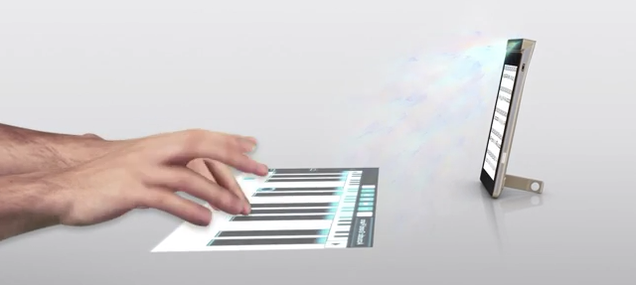
This, according to Lenovo, is the world’s first laser projection smartphone—and the fact that it recognizes gestures also means that it can turn any surface upon which its images appear into a touchscreen.

 At Lenovo Tech World conference the phone, called Smart Cast, features a built-in laser pico projector and a “gesture-based control system.” At the conference, it was used to throw films onto a wall, as well a qwerty keyboard onto a desk and a musical keyboard onto a tabletop, both of which allow the user to interact with them. The phone has a built in kickstand to hold it in place while your hands are busy.

The guys at PocketLint note that there seems to be little latency, which is a very good thing—but that’s about it in terms of details. While it’d definitely a real product, there’s no word on when or where it will be avaialble, let alone mow much it will cost.ce Into a Touchscreen

Sunday, 3 May 2015

WAAOOOOW.......Wireless charging as easy as connecting to Wi-Fi


Many of us can’t possibly imagine life without our smartphones, but they aren’t without their problems. Although the phones are continuing to get more powerful, battery life isn’t keeping up.  But what if you could charge them almost anywhere and it was as simple as connecting to Wi-Fi?
That’s exactly what wireless charging startup uBeam is aiming for. Last year we reported that uBeam had produced a fully functional prototype of its ultrasonic wireless charging platform. Now the company has refined its early prototypes into something more consumer-friendly, and venture capitalists are all over it.
After receiving $3.2 million in seed funding followed by a $10 million investment from Upfront Ventures last year, uBeam is looking at raising $50 million or more, according to TechCrunch. Part of this is related to developing the technology itself, but that isn’t all that uBeam has up its sleeve.

Instead of simply selling its wireless charging case and charging stations directly to consumers, uBeam is looking at partnering with retail locations, fast food chains, airlines, and others to provide wireless charging much in the same way that those locations currently offer Wi-Fi.
StarBucks is said to be especially close to signing a deal with uBeam, but Starwood hotels and Virgin are also mentioned. In addition to these retailers, uBeam is said to be talking with hardware manufacturers like Apple and Samsung. Whether this is about providing built-in wireless charging or simply partnering to sell wireless charging cases as accessories is unknown, but it’s hard not to get excited about the possibilities.
Unlike current wireless charging systems, which require the device being charged to remain stationary on a mat, uBeam’s ultrasonic transduction works at a range of around 15 feet, and there is no need for the devices to sit still. They can be operated even as they continue to charge.
There are still many problems to be solved before this technology becomes fit for daily use, but at least we are now at the beginning. And it might be the beginning of the end as well, at least as far as power cords are concerned.


Saturday, 2 May 2015

James Bond isn’t a fan of the Sony Xperia Z4


Sony is looking to make a smash-it out of the Xperia Z4, but the upcoming handset has already been bad-mouthed before its global release, by none other than secret agent James Bond.

007 wants the best, and apparently the Z4 isn’t it


Well, when we say James Bond we mean actor Daniel Craig. It was revealed from corporate emails leaked during the Sony Pictures hack last year that the Xperia Z4 was going to feature in the latest 007 film, Spectre. However, that product placement deal might now be on the ropes.

Wikileaks republished the leaked files last week, and a new email has been dug up sent by Columbia Pictures’ Andrew Gumpert, revealing that Craig and the film’s director Sam Mendes aren’t fans of the Sony Xperia Z4.

“BEYOND the $$ factor, there is, as you may know, a CREATIVE factor whereby Sam and Daniel don’t like the Sony phone for the film (the thinking, subjectively/objectively is that James Bond only uses the 'best,' and in their minds, the Sony phone is not the 'best'),” reads themessage.

In a bid to win Craig over, a separate email sent by George Leon says that Sony was willing to pay the star $5 million (£3.3m) to use the handset in the movie. A further $18 million (£12m) will be used on advertising and $5 million earmarked for production.

But Sony is also facing competition from Samsung, which has also reportedly offered a fixed placement fee of $5 million and a total advertising spend of $50 million (£33m).

These emails were sent a while back before production on Spectre kicked off, so the studio has probably decided now which tech it will go with. Will it be the Sony Xperia Z4 or Samsung Galaxy S6 Edge? We’ll have to wait until Spectre comes out on November 6 to find out.

There’s still no word on the Xperia Z4’s release outside of Japan. However, the email refers to May and November as release dates for Sony handsets.

Turn your smartphone Into a Surprisingly Accurate Ruler


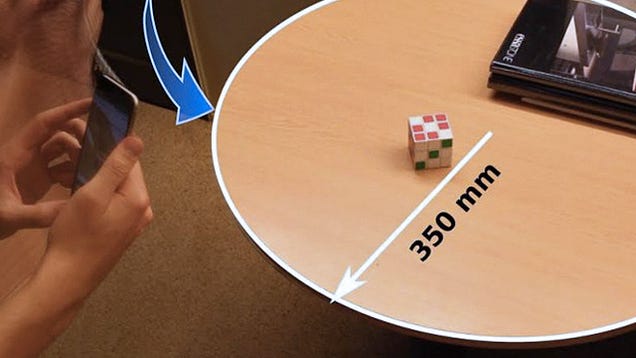
There are lots of easy-to-use apps that allow you to generate 3D models of physical objects using just your smartphone’s camera. But when it comes to calculating the exact size of an object, those same apps are actually pretty inaccurate. They don’t have to be, though, because researchers at Carnegie Mellon have found a way to boost measurement accuracy using additional data from a mobile device’s built-in motion sensors.

The same motion sensor that tells your smartphone when to automatically switch the display from portrait to landscape modes can be used to make incredibly accurately measurements of what its camera is seeing. The data generated by that sensor—called inertial measurement units—aren’t actually very precise. But as a smartphone is waived around an object being turned into a 3D model, that IMU data is actually more than accurate enough to allow the processing software to precisely calculate distance, or the size of the object being scanned.

When used with an application designed to track human faces, the new approach was able to accurately measure the distance between a subject’s pupils to within half a millimeter. So the next time you try on virtual glasses from a website using your phone’s front-facing camera, the app could also calculate whether or not they’d actually fit your face. But the technology has endless applications, from allowing 3D printers to act as perfect photocopiers for physical objects, to even improving the vision systems of autonomous smartcars that need to know exactly how far they are from everything around them.

How to Become a professional Photographer in no time

Easily Cut People and Objects From Photos With This Camera App

There are plenty of powerful third-party camera apps available for Android if you don’t like the one that came with your smartphone. They offer manual control over white balance, ISO and shutter speed, plus a range of advanced features—like the option to cut out moving people and objects from your photos, available in A Better Camera.

It’s designed for those moments when you’re trying to take the perfect shot of a beach, landscape or castle and your view keeps getting blocked by passing cars, dogs and joggers—the mode essentially takes several photos of the same view and then builds up a composite image made up of all the parts that have stayed static.

Easily Cut People and Objects From Photos With This Camera App

From the capture screen in A Better Camera, tap the mode button (bottom right) and choose Smart multishot. When you press the shutter button, keep the camera steady while the app does its work—you then want to choose Object removal from the next menu (you can create group shots and sequence shots using the same mode).

A Better Camera presents you with the shot that it thinks you want, and you can tap on any of the areas marked in blue to see what’s been hidden. In the areas where there is no blue highlighting, the app hasn’t detected any movement. You should find it comes in useful whenever you need to excise any extraneous elements from a fixed landscape shot.